
-
9-11 Eleven Years Later
-
these engineers and architects are pretty dumb if they cant work the real 911 truth out....they should ...
-
-
China's Air Pollution Behind Erratic Weather in the U.S., say Climatologists
-
Coal is dirty, but what happens to Australia if Chinese consumption falls.

-
-
Community Chat Room Poll
-
I get the impression this chat will start ringing like crazy

-
-
UK Column Live 9th July 2012
-
as activist for ukip and supporter of uk column having passed around 100,000 copys of this paper ...
-
Latest Comments
Chat Room Info
0 rooms, 0 connections, logins
Rooms:
None
Users: None
Rooms:
None
Users: None
Monsanto's Roundup may be linked to fatal kidney disease, new study suggests


- Details
- Created on Thursday, 27 February 2014 14:19
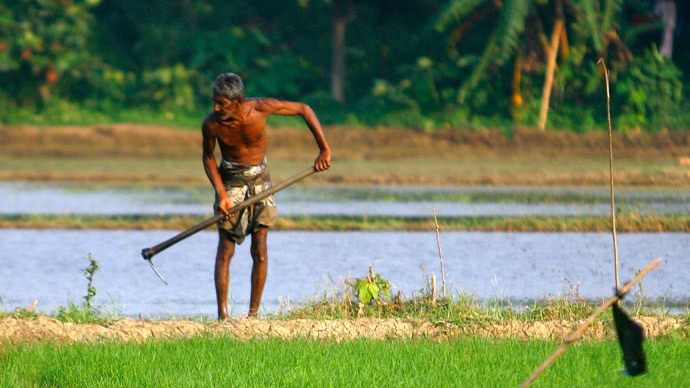
A heretofore inexplicable fatal, chronic kidney disease that has affected poor farming regions around the globe may be linked to the use of biochemical giant Monsanto's Roundup herbicide in areas with hard water, a new study has found.
The new study was published in the International Journal of Environmental Research and Public Health.
Researchers suggest that Roundup, or glyphosate, becomes highly toxic to the kidney once mixed with "hard" water or metals like arsenic and cadmium that often exist naturally in the soil or are added via fertilizer. Hard water contains metals like calcium, magnesium, strontium, and iron, among others. On its own, glyphosate is toxic, but not detrimental enough to eradicate kidney tissue.
The glyphosate molecule was patented as a herbicide by Monsanto in the early 1970s. The company soon brought glyphosate to market under the name "Roundup," which is now the most commonly used herbicide in the world.
The hypothesis helps explain a global rash of the mysterious, fatal Chronic Kidney Disease of Unknown etiology (CKDu) that has been found in rice paddy regions of northern Sri Lanka, for example, or in El Salvador, where CKDu is the second leading cause of death among males.
Furthermore, the study's findings explain many observations associated with the disease, including the linkage between the consumption of hard water and CKDu, as 96 percent of patients have been found to have consumed "hard or very hard water for at least five years, from wells that receive their supply from shallow regolith aquifers."
The CKDu was discovered in rice paddy farms in northern Sri Lanka around 20 years ago. The condition has spread quickly since then and now affects 15 percent of working age people in the region, or a total of 400,000 patients, the study says. At least 20,000 have died from CKDu there.
In 2009, the Sri Lankan Ministry of Health introduced criteria for CKDu. Basically, the Ministry found that CKDu did not share common risk factors as chronic kidney disease, such as diabetes, high blood pressure and glomerular nephritis, or inflammation of the kidney.
Based on geographical and socioeconomical factors associated with CKDu, it was assumed that environmental and occupational variables would offer clues to the disease's origins – or in this case, it came from chemicals.
READ MORE: Monsanto's Roundup may be linked to fatal kidney disease, new study suggests

