daniel-in-denial.blogspot.com/2011/05/re...ment-by-ernesto.html
(…)
After that, I pondered about the general meaning of existence, and thought about our own floods and earthquakes. Thus, I started to elaborate a series of theories, because the idea of us being ruled by an almighty, omniscient and kind God seemed so contradictory that I didn’t even believe it could be taken seriously. When we reached the time of the gang of robbers, I had elaborated already the following possibilities:
1) God doesn’t exist
2) God exists, and he’s a scoundrel
3) God exists, but sometimes he dreams: His nightmares are our existence.
4) God exists, but he has fits of madness, those fits are our existence.
5) God isn’t omniscient, he can’t be everywhere. Sometimes he’s absent, in other worlds? In other things?
6) God is a poor bastard, with a problem too complicated for his strengths. He fights the matters as an artist fights his work. Sometimes, at some moment, he manages to be Goya, but he’s generally a mess.
7) God was defeated before History by the Prince of Darkness. And defeated, turned into a presumed devil, he’s discredited twice, since this calamitous universe is attributed to him.
I did not make up all these possibilities, although at that time I believed so; later, I realized some had been tenacious convictions of men, specially the one about the triumphant devil. During over a thousand years, intrepid and lucid men had to face death and torture for revealing this secret.
They were annihilated and scattered, since, it’s obvious, the forces that rule the world won’t stop on little things when they’re capable of doing what they generally do. And thus, poor bastards or geniuses, they were equally tormented, burned by the Inquisition, hanged, skinned alive; entire towns were decimated and dispersed. From China to Spain, the state religion (Christian or mazdaism) cleaned the word of any attempt of revelation. And it can be said that, up to certain extent, they achieved their goal. Because, even when some of the sects could not be eliminated, they became on their time into a new source of lies, just like it happened to Mohammedans.
Let’s see the mechanism: According to Gnostics, the sensible world was created by a demon called Jehovah. For a long time, the Supreme Deity lets it work freely in the world, but eventually he sends his son to temporarily inhabit Jesus’ body, so that, in that way, he could free the world from Moses’ fallacious teachings. And now: Muhammad used to think, like some of these Gnostics, that Jesus was a simple human being, that God’s Son had descended to him during baptism and abandoned him in the Passion, since if it wasn’t so, the famous yell “My God, my God.
Why have you abandoned me?” would be unexplainable. And when romans and jews mock Jesus, they’re mocking some sort of ghost. But the serious thing is that, in this way (and in a more or less similar way, same happens with other rebel sects), the mystification has not been revealed, but it has strengthened.
Because, for the Christian sects that declared that Jehovah was the Devil and that with Jesus a new era began, like for Mohammedans , if the Prince of Darkness reigned until Jesus (or until Muhammad), now instead, defeated, he has gone back to his hells. As it can be understood, this is a double mystification: When the great lie weakens, these poor bastards strengthen it.
My conclusion is obvious: The Prince of Darkness still reigns. And that reign is made through the Sacred Sect of the Blind. Everything’s so clear that I’d almost start laughing if dread didn’t posses me.
Of course, we had to read at least this excerpt in my Latin American Literature course. “Report on the Blind” finds Martín late at night in Buenos Aires, in the summer of 1947, and as he tells us, at “the beginnings of my systematic investigation” of how the blind survive in the streets and underground maze of Buenos Aires, as part of a secret society.
Unlike the magical environment of Fuentes or García Márquez which delights my students from the start, this story infuses the reader with a gradual descent into a desperate time. The city no longer belongs to them who think they know it, who think they own it. The pragmatic mid-twentieth century with its certainty of the modern and its self-sufficient distance from the baroque mess of its collective history, in this story of madness, fails the citizens.
Gradually, the cosmopolitan Latin American loses grasp of reality and begins to recognize that the blind people are more aware of him than he is of them; that they can survive in the underbelly of any city a lot better than he, and that in fact it is they who are following him, they who control the money by selling trinkets on buses, they who are writing a report on the sighted rather than the other way around.
Sábato makes the hair on our arms stand on end. Yes, we recognize that the narrator is mad, that he is paranoid, and while there is some relief as we disentangle and get some distance from the narrative, the effect is indelible. If we can be roped in by a story as nonsensical as this, if we can be dragged by a paranoid narrator as he tries to construct his own proof for the existence or absence of a god in the universe, then, what do we know about our own historical beginnings? Who are we, who founded our nations, what do we have in common with each other?
(And for non-Latin Americans this may make somewhat less sense, but there is the disquieting fact of history that tells us that most of the próceres never did come home after the wars. We know that San Martín refused to get off the ship to walk on American soil again, and went back to Europe, to exile. We know that O’Higgings abdicated and left Chile to live the rest of his life in Perú, and that Manuel Rodríguez was betrayed by his friends who saw him as a rival for the power they sought in government.)
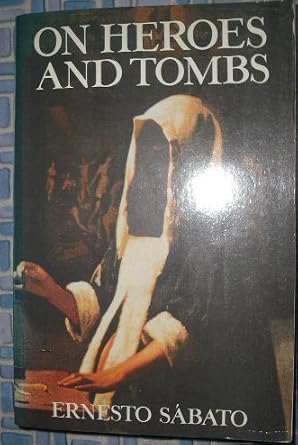
People did rather hound Juán Rulfo for years after he published Pedro Páramo, because they wanted another novel and he had already written the one he needed to write. Something similar happened to Sábato because his novel opened perhaps too big a can of worms about Latin America, even if it isn’t a lyrical wonder like Pedro Páramo, or a feat of magic like One Hundred Years of Solitude, GGM’s masterpiece.
But Sábato, unlike the less vain Juán Rulfo, kept trying to write a better book– he just couldn’t put the lid back on the last one.
In 1973, on the 11th of September, I did have a chance to ask why I had been so disturbed by Sábato’s strange novel. Watching the news on a black & white TV set in rural Connecticut, I learned that the first bloody battle had broken out in Chile since colonial times and my countrymen were imprisoned in a state of siege. Whatever united us was deep in our bones. The pain of alienation had become exile, and it hurt far into the soul, more than I had ever imagined. I was still young and knew very little, but some of the perspectives one learns from books in the quiet moments that shape our lives, teach us how to see for the rest of the life we’ve got.
For whatever that’s worth, I wanted to share as many strange and wonderful ways of seeing the world with my students.
Ernesto Sabato died on April 30, 2011. His death is a loss not just to spanish literature but to arts in general. This passages resembles a troubled and rather crazy man who manages to explain god's existence trough some wicked way of seeing things. This is one of my favourite passages of the book, and the chapter that it belongs to is considered his masterpiece.



![Ernesto%2Bcon%2Bsu%2Bnieto%2BJuan[1]](https://4.bp.blogspot.com/_nJD-qq2_LeE/S64X00bEuTI/AAAAAAAAAaI/xDo8TkJYklo/s1600/ernesto%2Bcon%2Bsu%2Bnieto%2BJuan[1].JPG)