I think he was acting. As to your other questions, which were good, I'm thinking about it.
“[My staff] and I hope the people of Newtown don’t have it crash on their head later.” –Connecticut Medical Examiner D. Wayne Carver II, MD, December 15, 2012
Inconsistencies and anomalies abound when one turns an analytical eye to news of the Newtown school massacre. The public’s general acceptance of the event’s validity and faith in its resolution suggests a deepened credulousness borne from a world where almost all news and information is electronically mediated and controlled. The condition is reinforced through the corporate media’s unwillingness to push hard questions vis-à-vis Connecticut and federal authorities who together bottlenecked information while invoking prior restraint through threats of prosecutorial action against journalists and the broader citizenry seeking to interpret the event on social media.
Along these lines on December 19 the Connecticut State Police assigned individual personnel to each of the 26 families who lost a loved one at Sandy Hook Elementary. “The families have requested no press interviews,” State Police assert on their behalf, “and we are asking that this request be honored.[1] The de facto gag order will be in effect until the investigation concludes—now forecast to be “several months away” even though lone gunman Adam Lanza has been confirmed as the sole culprit.[2]
....
The Accidental Medical Examiner
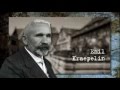
An especially important yet greatly underreported feature of the Sandy Hook affair is the wholly bizarre performance of Connecticut’s top medical examiner H. Wayne Carver II at a December 15 press conference. Carver’s unusual remarks and behavior warrant close consideration because in light of his professional notoriety they appear remarkably amateurish and out of character.
....
Along these lines the pathologist has gone to excessive lengths to demonstrate his findings and expert opinion in court proceedings. For example, in a famous criminal case Carver “put a euthanized pig through a wood chipper so jurors could match striations on the bone fragments with the few ounces of evidence that prosecutors said were on the remains of the victim.”[4] One would therefore expect Carver to be in his element while identifying and verifying the exact ways in which Sandy Hook’s children and teachers met their violent demise.
Yet the H. Wayne Carver who showed up to the December 15 press conference is an almost entirely different man, appearing apprehensive and uncertain, as if he is at a significant remove from the postmortem operation he had overseen. The multiple gaffes, discrepancies, and hedges in response to reporters’ astute questions suggest that he is either under coercion or an imposter. While the latter sounds untenable it would go a long way in explaining his sub-pedestrian grasp of medical procedures and terminology.
Reporter #1: So the rifle was the primary weapon?
H. Wayne Carver: Yes.
Reporter #1: [Inaudible]
Carver: Uh (pause). Question was what caliber were these bullets. And I know—I probably know more about firearms than most pathologists but if I say it in court they yell at me and don’t make me answer [sic]—so [nervous laughter]. I’ll let the police do that for you.
Reporter #2: Doctor can you tell us about the nature of the wounds. Were they at very close range? Were the children shot at from across the room?
Carver: Uhm, I only did seven of the autopsies. The victims I had ranged from three to eleven wounds apiece and I only saw two of them with close range shooting. Uh, but that’s, uh y’know, a sample. Uh, I really don’t have detailed information on the rest of the injuries.
[Given that Carver is Connecticut’s top coroner and in charge of the entire postmortem this is a startling admission.-JT]
Reporter #3: But you said that the long rifle was used?
Carver: Yes.
Reporter #3: But the long rifle was discovered in the car.
State Police Lieutenant Vance: That’s not correct, sir.
Unidentified reporter #4: How many bullets or bullet fragments did you find in the autopsy. Can you tell us that?
Carver: Oh. I’m lucky I can tell you how many I found. I don’t know. There were lots of them, OK? This type of weapon is not, uh … the bullets are designed in such a fashion that the energy—this is very clinical. I shouldn’t be saying this. But the energy is deposited in the tissue so the bullet stays in [the tissue].
[In fact, the Bushmaster .223 Connecticut police finally claimed was used in the shooting is designed for long range field use and utilizes high velocity bullets averaging 3,000 feet-per-second, the energy of which even at considerable distance would penetrate several bodies before finally coming to rest in tissue.]
Reporter #5: How close were the injuries?
Carver: Uh, all the ones (pause). I believe say, yes [sic].
Reporter #6: In what shape were the bodies when the families were brought to check [inaudible].
Carver: Uh, we did not bring the bodies and the families into contact. We took pictures of them, uhm, of their facial features. We have, uh, uh—it’s easier on the families when you do that. Un, there is, uh, a time and place for the up close and personal in the grieving process, but to accomplish this we thought it would be best to do it this way and, uh, you can sort of, uh … You can control a situation depending on the photographer, and I have very good photographers. Uh, but uh—
Reporter #7: Do you know the difference of the time of death between the mother in the house and the bodies recovered [in the school].
Carver: Uh, no, I don’t. Sorry [shakes head excitedly] I don’t! [embarrassed laugh]
Reporter #8: Did the gunman kill himself with the rifle?
Carver: No. I—I don’t know yet. I’ll-I’ll examine him tomorrow morning. But, but I don’t think so.
[Why has Carver left arguably the most important specimen for last? And why doesn't he think Lanza didn't commit suicide with the rifle?]
Reporter #9: In terms of the children, were they all found in one classroom or—
Carver: Uhm … [inaudible] [Turns to Lieutenant Vance] Paul and company will deal with that.
Reporter #9: What?
Carver: Paul and company will deal with that. Lieutenant Vance is going to handle that one.
Reporter #10: Was there any evidence of a struggle? Any bruises?
Carver: No.
Reporter #11: The nature of the shooting; is there any sense that there was a lot of care taken with precision [inaudible] or randomly?
Carver: [Exhales while glancing upward, as if frustrated] Both. It’s a very difficult question to answer … You’d think after thousands of people I’ve seen shot but I … It’s … If I attempted to answer it in court there’d be an objection and then they’d win—[nervous laughter].
[Who would win? Why does an expert whose routine job as a public employee is to provide impartial medical opinion concerned with winning and losing in court? Further, Carver is not in court but rather at a press conference.]
Reporter #12: Doctor, can you discuss the fatal injuries to the adults?
Carver: Ah, they were similar to those of the children.
Reporter #13: Doctor, the children you had autopsied, where in the bodies were they hit?
Carver: Uhm [pause]. All over. All over.
Reporter #14: Were [the students] sitting at their desks or were they running away when this happened?
Carver: I’ll let the guys who—the scene guys talk—address that issue. I, uh, obviously I was at the scene. Obviously I’m very experienced in that. But there are people who are, uh, the number one professionals in that. I’ll let them—let that [voice trails off].
Reporter [#15]: How many boys and how many girls [were killed]?
Carver: [Slowly shaking his head] I don’t know.
.....
■Why Were Medical Personnel Turned Away From the Crime Scene?
Oddly enough medical personnel are forced to set up their operation not at the school where the dead and injured lay, but rather at the fire station several hundred feet away. This flies in the face of standard medical operating procedure where personnel are situated as close to the scene as possible. There is no doubt that the school had ample room to accommodate such personnel. Yet medical responders who rushed to Sandy Hill Elementary upon receiving word of the tragedy were denied entry to the school and forced to set up primary and secondary triages off school grounds and wait for the injured to be brought to them.
More at
www.globalresearch.ca/the-sandy-hook-sch...-information/5316776




 .... some geezer shoots lanzas mum in their own house then drags in adam lanza to school all drugged up and shoots the crap out of all the kids, he then shoots lanza and puts the gun in his hand and then walks off into the woods.

 R U Serios?


 and bullying won't stop because of it.


 ers
ers